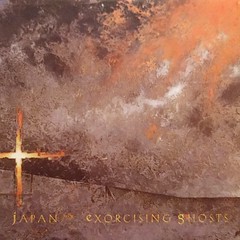
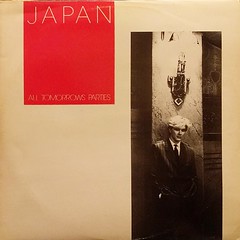
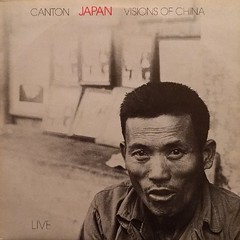
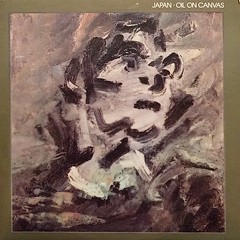
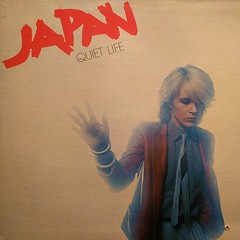
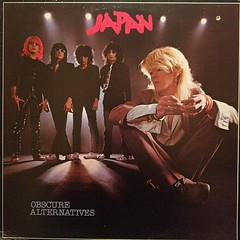
This 1984 compilation, apparently overseen by Sylvian, is rather odd, for it contains only three tracks from the fist two records. Instead, it focuses on the last two records. The record also includes some rarities, like A Foreign Place, Life Without Buildings (which isn't rare if you have the 1981 12" single of The Art of Parties), and a remix of Taking Islands in Africa. The CD and cassette versions have different track listings. This a great intro into the mostly later years. If you want a compilation of the early years, Assemblage is the obvious one to get.
All Tomorrows Parties originally appeared on Quiet Life in 1979. The discogs entry for this 12" single has a good description of this release:
"The original of 'All Tomorrows Parties' was recorded in June 1979; the mix featured here was made in 1981 by Steve Nye but not released until 1983 (hence it is known as the "1983 Remix" and the copyright dates are 1981). The other two tracks, 'Deviation' & 'Obscure Alternatives' are taken from the 'Live In Japan' EP which was released in July 1980.
There were 4 different 12" Vinyls [sic] released, all crediting the wrong Producer. This entry is release # 3 which uses the standard Hansa Label & lists Giorgio Moroder as producer, however this is incorrect.
All releases are credited incorrectly as it was Simon Napier-Bell and Japan who produced All Tomorrows Parties. [source]
I like this track immensely, but I find it can't really compete with the Velvet Underground.
Both tunes are taken from Oil on Canvas. You can clearly hear the Eastern influences on these tracks. This single was released in 7" and 12" formats in various parts of Europe. I have the first UK pressing.
In June, 1983, the band (or maybe the record company) released Oil on Canvas, a double live LP. The record also contains three instrumental studio tracks: Oil on Canvas, Voices Raised in Welcome, Hands Held in Prayer and Temple of Dawn, plus a new version of Nightporter. Oddly, this was the band's highest charting record. Maybe they gave up too soon.
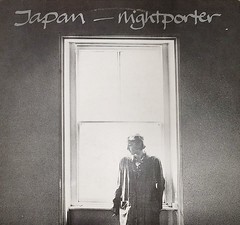
This UK 12" pressing contains the full length version of Nightporter, originally from Gentlemen Take Polaroids. The flip-side is a tune called Methods of Dance. This is the shorter version of the title track:
Visions of China is taken from the forthcoming Tin Drum. Swing, on side B, is from Gentlemen Take Polaroids. This is a UK pressing. Visions of China was released on 12" in North America in 1982.
Tin Drum was the last studio record from Japan and it's quite possibly the band's best record. It has a greater emphasis on sounds from the Far East sound including Orientalist influences (I think I read that on Wikipedia). I wonder if the word Orientalist is outmoded now. On the other hand, the cover image leaves no doubt that Oriental was a theme.
The record includes a re-recording of The Art of Parties, on of the singles from a total of four released. I can't say it better than the people at Sputnik Music:
Tin Drum is an intricate collage of arty soundscapes and exotic
instrumentation. There are no trashy glam flourishes, no awkward Bryan
Ferry posturing. This is an album with its own voice; with every member
confident in their role, and not a sound out of place. With communist
China as a loose concept, the album is crammed with polyrhythmic
percussion (excellently performed by Steve Jansen) and traditional
oriental instruments that invoke influences without falling into the
trap of becoming a cheap pastiche. Xylophones and Mick Karn's fretless
bass give it all an organic, off-kilter feel, yet Richard Barbieri's
electronics twist an icy knife into the arrangements to present a clash
of human warmth with desolate technology, reinforcing the Red Army
concept and the images of rural peasants struggling to survive amidst
the new order. 'The Art of Parties' opens the album and launches
straight into some rollicking, warped percussive effects, but has
enough space left to ensure they don't take over, or suppress David
Sylvian's wonderfully unique vocals. He has finally found his
confidence here, his words flowing gracefully over the top of all the
hollow clanks and synth washes of songs like 'Visions Of China' and 'Cantonese Boy'. But even when he's absent, as on the gorgeous instrumental 'Canton', you don't lose interest; you just get drawn into the strange, fractured sounds even more. [source]
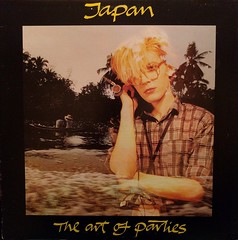
The Art of Parties appears in re-recorded form later in 1981 on Tin Drum, the group's final studio record. This first version was released on this single. The 12" single (mine is from Canada) contains three other tracks: The Width of a Room, Life Without Buildings, and The Experience of Swimming.
I knew a guy back-in-the-day, who always claimed that Japan released only one good record, and that record was Gentlemen Take Polaroids. I agree that this is a great record, but I can't agree that this is the only good one from the band.
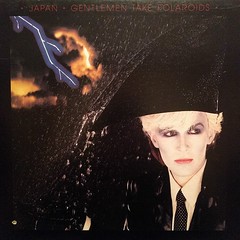
Gentlemen Take Polaroids is the fourth record from the band, and the first on the band's new label, Virgin. And it's great. It's so good, in fact, that all of the tracks (except one) appear on the compilation Exorcising Ghosts.
This is the record that really brought a change of sound. I really like it. The only single from the record is fabulous, though I am not sure what these gentlemen are photographing.
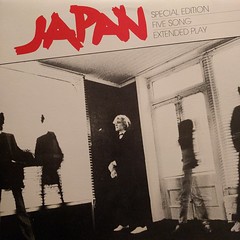
This was a Canadian-only five track EP, containing I Second That Emotion, made famous by Smokey Robinson, a remix of European Son, Life in Tokyo (from Quiet Life), Stateline, and a re-recorded version of Adolescent Sex. It's a nice collection.
This is a fabulous record. My favourite track from Quiet Life is the titular track. The band does a cover of the Velvet Underground's All Tomorrow's Parties, which is interesting, but I prefer the original. There is a major change in sound, mostly in David's vocals. Allmusic says this:
Quiet Life is the album that transformed Japan
from past-tense glam rockers into futuristic synth popsters, though
they'd been leaning in that direction for a while. It's also a solid
proto-New Romantic synthesizer record, enhanced by Mick Karn's superb fretless bass work and David Sylvian's smooth, sneering vocals spread over pop hits like the title track and "Fall in Love with Me." [source]
I recently learned a couple of things about this record. First, I hadn't realized that this LP was released in Canada before the UK. It came out here in December of '79, but in January '80 across the pond. That is odd. I also didn't know that this record was included in the book 1001 Records You Must Hear Before you Die. I wonder what else is on that list.
There is a slight change in sound with this record, but I am a big fan -- especially of David's voice -- so I really don't mind. I like everything the band did, as well as all of Sylvian's solo and collaborative efforts, especially those with Robert Fripp. I'd say that the band became far more interesting as time progressed.
I think that the reviews of this record were mixed -- as they often are -- or just plain negative, but I think this is a really good record, though there are some uninspired moments, perhaps. There's even some reggae on this LP, which is kind of odd.
The Canadian pressing has a different track order to the original UK
pressing. But, what else is new in the world of schizophrenic record
companies? The top tracks for me is probably Rhodesia.
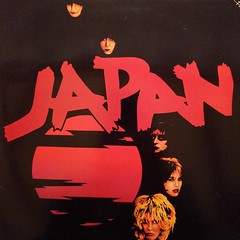
I suspect that if this record were released today, there would be cries of cultural appropriation because of the name of the band and because of the image of what appears to be a rising sun. We have become a narrow-minded species.
This LP was released in Canada on vinyl and 8 Track. I still cannot fathom why anyone allowed that format. It is probably the worst format even imagined for music. Even downloading highly compressed MP3s is a better idea. I happen to have a UK pressing, though it's a re-release from 1984, which is probably when I really started paying attention to the band, though I had probably heard tracks before then, I think.
This debut is really fabulous. No adolescent boy could ever have failed to appreciate Adolescent Sex, both the act and the song. To me, this is a five star record, with solid tracks all the way through. It's punkish, but probably not punk. Call it new romantic, post punk, new wave, alternative, art rock, glam, synth pop, or whatever you want. It's awesome. It's also far different from later Japan releases, when the band mellowed out a bit.
But, here is something weird. Try search for the title track -- Adolescent Sex -- on youtube, and you will find nothing. Leave out the word sex, and you will. How dumb is that? So, here is Adolescent S*x: